Maternal postpartum high-dose vitamin D3 supplementation (6400 IU/day) or conventional infant vitamin D3 supplementation (400 IU/day) lead to similar vitamin D status of healthy exclusively/fully breastfeeding infants by 7 months of age
Daniel E Roth
Department of Paediatrics, The Hospital for Sick Children and University of Toronto, Toronto, Ontario, Canada
Correspondence to : Dr Daniel E Roth Department of Paediatrics, The Hospital for Sick Children and University of Toronto 686 Bay Street, Toronto, ON, Canada M5G 0A4; daniel.roth{at}sickkids.ca
Statistics from Altmetric.com
NUTRITION & DIETETICS
PUBLIC HEALTH
PREVENTIVE MEDICINE
Commentary on:HollisBW, WagnerCL, HowardCR, et al. Maternal versus infant vitamin D supplementation during lactation: a randomized controlled trial. Pediatrics 2015;136:625–34.
Context
Routine vitamin D supplementation (400 IU/day) of breastfed infants has been recommended in North America for >50 years.1 Historically, the practice was advocated to prevent rickets; recently, there has been greater emphasis on its role in maintaining serum 25-hydroxyvitamin D concentrations (25(OH)D) above conventional thresholds of sufficiency (eg, 50 nmol/L).2 Yet, some breastfeeding advocates have argued that this policy conflicts with the message that mother's milk is a complete source of nutrient requirements in the first 6 months of life. The recognition that breast milk vitamin D inadequacy reflects maternal vitamin D insufficiency has prompted efforts to define maternal postpartum vitamin …
View Full Text
Request Permissions
If you wish to reuse any or all of this article please use the link below which will take you to the Copyright Clearance Center's RightsLink service. You will be able to get a quick price and instant permission to reuse the content in many different ways.
Vitamin D is important for maintaining a healthy body, primarily because it helps you fully maximize your body's absorption and utilization of calcium, an important mineral that we all need. When paired with calcium, vitamin D helps regulate bone remodeling and growth, ensuring healthy, strong bones. Vitamin D can also help protect older adults from osteoporosis, which occurs due to excess bone loss from aging.
Furthermore, this nutrient boosts your immune system and reduces inflammation within your body, potentially warding off future medical conditions in the process. It also plays a vital role in cell growth, neuromuscular functions and protein encoding. Studies have shown that a regular, healthy vitamin D intake can also serve as an antidepressant and make people feel generally happier. But that's not all you'll want to know about vitamin D.
Sources of Vitamin D
Vitamin D is naturally found in certain foods and now appears in many more foods that have been fortified with added nutrients. The best sources of naturally occurring vitamin D are oily fish such as salmon, tuna, cod, sardines and mackerel. Fish liver oils are another good source of vitamin D. Small amounts of the nutrient are present in beef liver, cheese, egg yolks and mushrooms.
Photo Courtesy: Alexander Spatari/Moment/Getty Images
Commonly, vitamin D-fortified foods include whole milk, orange juice, margarine and breakfast cereals. It's important to look at the label and nutrition facts to verify that vitamin D is in a particular food you're considering. Because dairy products are often fortified with vitamin D, lactose intolerant or vegan individuals should keep an eye on their diets to ensure they get enough of the vitamin.
Sun exposure is another method of naturally obtaining vitamin D, as our bodies can create their own vitamin D upon exposure to ultraviolet (UV) rays from the sun. However, it's difficult to gauge exactly how much sun exposure can generate sufficient vitamin D, as overexposure can be harmful, too. UV rays are also known to trigger free radicals, which can lead to skin cancer if left unchecked.
It's been suggested that getting approximately 15 minutes of sun exposure between 10 a.m. and 3 p.m. at least twice a week to your face, arms, legs or back will help your body synthesize enough vitamin D. It's important to note that you can't cover the exposed area of your body with sunscreen if you choose to get vitamin D naturally. The SPF blocks UV rays and can hinder your body's ability to create vitamin D. If you're in the shade or behind a window, the rays will not get through. If the climate where you live is primarily cloudy, it's important to get your recommended amount of vitamin D via other means.
Dietary supplements are also an excellent way of obtaining vitamin D. Supplements come in two forms: vitamin D3 (cholecalciferol), which is identical to the form your body makes when exposed to sunlight, and vitamin D2 (ergocalciferol), which differs slightly from D3 in its chemical side-chain structure. There's some evidence that vitamin D3 increases and maintains overall levels slightly better than vitamin D2.
Side Effects of a Vitamin D Deficiency
Vitamin D deficiency occurs when you don't adequately absorb the nutrient or when your kidneys can't convert the nutrient to its active form. This deficiency can result in medical conditions, two of which are called rickets and osteomalacia.
Photo Courtesy: RealPeopleGroup/E+/Getty Images
Rickets, a disease characterized by a failure of bone tissues to get enough minerals, can result in abnormal, soft bones and skeletal deformities. It's most common in children. Fortunately, it isn't permanent, and kids can consume as few as 1 to 3 teaspoons of cod liver oil a day to reverse the condition.
With the help of fortified foods today, rickets is almost obsolete in the United States. Osteomalacia, characterized by soft and weak bones, is usually present in adults. It's commonly treated with an intense regimen of vitamin D replacement under the care of a physician.
Vitamin D and Other Health Conditions
Vitamin D deficiency has been linked to cardiovascular disease, and people with lower levels of vitamin D appear to be at an increased risk of having a heart attack or stroke. However, the exact relationship isn't clear, and there appears to be no benefit to cardiovascular risk in taking a vitamin D supplement.
Photo Courtesy: PixelsEffect/E+/Getty Images
Research is also ongoing to find if there's a link between vitamin D and multiple sclerosis (MS). It appears that vitamin D deficiency is linked to the development of MS, and people with MS and higher levels of vitamin D appear to have reduced disease activity.
Low vitamin D has been linked to an increased risk of contracting respiratory illnesses such as influenza A. It appears that people with low vitamin D levels are at greater risk of severe novel coronavirus (COVID-19) infection. It's not clear yet if routine vitamin D supplementation would reduce this risk.
Because vitamin D is a fat-soluble substance, it can stay in your body for several days. Thus, vitamin D poisoning is possible if you supplement too much vitamin D over a period of a few months. Symptoms of vitamin D overdose include dehydration, vomiting, decreased appetite, irritability, constipation and fatigue. If left unaddressed, vitamin D poisoning can lead to anorexia, over-calcification of the bones and internal organs, kidney stones and hypertension (high blood pressure). It's important to note that vitamin D poisoning usually only occurs with excessive intake of dietary supplements. It's highly unlikely to occur as a result of normal dietary intake and sun exposure.
Daily Dosage Recommendations
The recommended dietary allowances for vitamin D vary depending on your age and other health and life circumstances, such as pregnancy. For infants under 12 months, the recommended intake is 400 international units (IU) or 10 micrograms (mcg). For individuals under 70 years old, the recommended intake is 600IU (15mcg). For individuals over 70 years old, the intake increases to 800IU (20mcg).
before using,wash the wound with water. 5. Strengthen brows to help prevent loss and breakage. 8. Keep eyebrows in good repair.
$3.00-$4.00/ Bag
1 Bag(Min. Order)
$3.50-$5.00/ Bag
1 Bag(Min. Order)
$40.00/Bag (Shipping)
$0.30-$0.50/ Piece
1 Piece(Min. Order)
$35.36/Piece (Shipping)
$0.99-$1.99/ Piece
24.0 Pieces(Min. Order)
$3.00-$4.00/ Bag
1 Bag(Min. Order)
$3.00-$4.00/ Bag
1 Bag(Min. Order)
$35.00/Bag (Shipping)
$4.80-$5.70/ Bag
3 Bags(Min. Order)
$10.00/Bag (Shipping)
$5.30-$9.50/ Bag
1 Bag(Min. Order)
$24.60/Bag (Shipping)
$0.01-$0.03/ Piece
300000.0 Pieces(Min. Order)
$5.00-$5.70/ Bag
3 Bags(Min. Order)
$12.75/Bag (Shipping)
$2.80-$4.00/ Piece
1 Piece(Min. Order)
$43.74/Piece (Shipping)
$2.94-$3.52/ Piece
10 Pieces(Min. Order)
$3.25-$3.75/ Roll
10 Rolls(Min. Order)
$6.19/Roll (Shipping)
$8.00-$12.00/ Box
5 Boxes(Min. Order)
$4.80-$5.70/ Bag
3 Bags(Min. Order)
$6.00-$9.00/ Bag
10 Bags(Min. Order)
$10.10/Bag (Shipping)
$3.70-$6.00/ Bag
1 Bag(Min. Order)
$37.40/Bag (Shipping)
$19.50/ Box
10 Boxes(Min. Order)
$2.80-$4.30/ Bag
1 Bag(Min. Order)
$12.60-$35.00/ Bag
1.0 Bags(Min. Order)
$0.25-$0.29/ Piece
100 Pieces(Min. Order)
$3.50-$4.00/ Bag
1 Bag(Min. Order)
$27.00/Bag (Shipping)
$0.15-$0.30/ Piece
1 Piece(Min. Order)
$5.16/Piece (Shipping)
$1.70-$1.80/ Box
10 Boxes(Min. Order)
$3.00-$5.00/ Bag
1 Bag(Min. Order)
$31.96/Bag (Shipping)
$0.04-$0.08/ Piece
500 Pieces(Min. Order)
$0.28/Piece (Shipping)
$0.50/ Piece
50 Pieces(Min. Order)
$0.74/Piece (Shipping)
$6.99-$10.99/ Box
1 Box(Min. Order)
About products and suppliers:
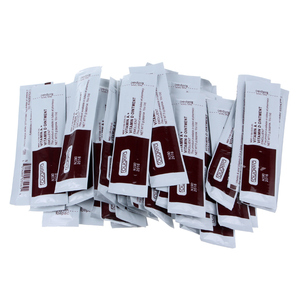
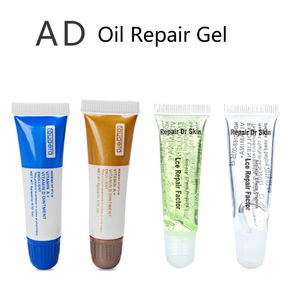
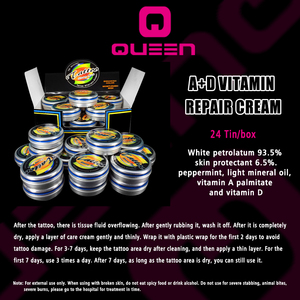
Apply vitamin a d ointment from Alibaba.com and create a unique and creative design. They are a thin sheet of paper applied directly onto the skin creating an outline for the artist to work within. They are crafted by talented and creative artists. These vitamin a d ointment are available in different sizes and designs and shapes to cater to varied customers.
They make work so much easier as they create a consistent and neat outline. They don't smudge or fade midway during the tattooing process. These vitamin a d ointment are safe to use on the skin without risking rashes or infections. The customer can reuse the stencil over and over without worrying about it fading or tearing. They are the perfect tool to create unique and fast tattoos. Their accuracy, symmetry, and ease of use make them the perfect tattooing tools.
They are made by a screen printing process whereby the papers used are non-porous or plastic coated with lacquer or gelatin or even glue. The stencils used are very accurate to create precise and clear designs. They make choosing the design for the customers easier and help to contribute to the development of the user's ideas. They are the perfect investment as they help to make designing and drawing the designs easier. Using vitamin a d ointment is super easy and effective. Alibaba.com has a wide assortment of stencils at affordable prices.
Browse great offers on the best vitamin a d ointment options. They are locally available and are sold in stacks or in singles. Go through Alibaba.com and find quality products from a range of wholesalers and retailers.